

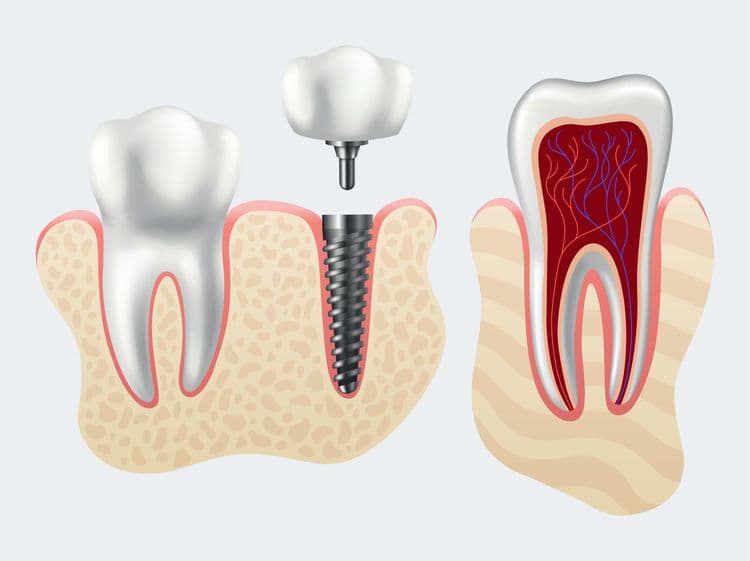
Jawbone implants represent a significant advancement in dental technology, offering a viable solution for individuals experiencing tooth loss and subsequent jawbone deterioration. These implants, crafted from biocompatible materials such as titanium and zirconia, seamlessly integrate with the jawbone through osseointegration. This integration guarantees a stable and durable foundation for prosthetic teeth. Understanding the complexities and innovations behind these implants provides insight into their growing preference over traditional dental solutions, suggesting a transformative impact on oral rehabilitation.
Understanding Jawbone Loss: Causes and Consequences
Jawbone loss, also known as alveolar bone resorption, is a pathological condition characterized by the progressive deterioration of bone tissue in the jaw. This condition primarily arises from tooth loss, periodontal disease, or trauma, which disrupts the normal bone remodeling process. In addition, systemic factors such as osteoporosis and hormonal changes can accelerate resorption. The causes of jawbone loss are multifaceted, often involving both local and systemic influences. The consequences of jawbone loss are significant, impacting oral functionality and aesthetics. Diminished bone volume can lead to compromised denture stability, altered facial structure, and impaired masticatory efficiency. Moreover, jawbone loss may complicate prosthetic dental rehabilitation, necessitating more complex interventions. Understanding these factors is vital for effective management and prevention of further bone deterioration.
The Science Behind Jawbone Implants
Addressing the challenges posed by jawbone loss necessitates a deeper understanding of the scientific principles underlying jawbone implants. This intricate process involves bone regeneration techniques and implant integration strategies that guarantee successful outcomes. Bone regeneration is achieved through osteoconduction, osteoinduction, and osteogenesis, which facilitate the formation of new bone tissue around the implant. Osteoconduction provides a scaffold for bone growth, while osteoinduction involves the recruitment of precursor cells that differentiate into osteoblasts. Osteogenesis pertains to the development of new bone from existing bone cells. Implant integration strategies are critical for osseointegration, where the implant becomes a functional part of the jawbone. This requires meticulous attention to surgical precision and biomechanical stability, enhancing the long-term success of jawbone implants.
Materials Used in Modern Jawbone Implants
Modern jawbone implants incorporate materials such as titanium, zirconia, and advanced composites, each chosen for its specific attributes. Titanium is favored for its exceptional durability and biocompatibility, ensuring long-term integration with bone tissue. Zirconia offers an aesthetic advantage due to its tooth-like coloration, while advanced composite materials provide tailored mechanical properties and weight reduction without compromising structural integrity.
Titanium’s Durability and Biocompatibility
Titanium is a cornerstone material in the domain of modern jawbone implants, renowned for its exceptional durability and biocompatibility. This metal exhibits remarkable titanium strength, capable of withstanding substantial masticatory forces without compromising structural integrity. Its resilience is complemented by a low density, providing a favorable strength-to-weight ratio critical in oral applications. Furthermore, titanium facilitates biological integration, forming a robust osseous interface through a process known as osseointegration. This phenomenon guarantees stable anchorage within the jawbone, mitigating risks of implant failure. Titanium’s inert surface properties minimize inflammatory responses, promoting cellular adhesion and proliferation. Consequently, its use in dental implants provides a long-term solution, harmonizing mechanical and biological demands, thereby supporting sustained oral function and patient well-being.
Zirconia’s Aesthetic Appeal
While titanium’s prominence in jawbone implants is attributed to its durability and biocompatibility, zirconia stands out for its superior aesthetic qualities. Zirconia, a ceramic material, offers significant benefits regarding aesthetics due to its inherent translucency and color resemblance to natural teeth. These properties make zirconia a prime choice for patients prioritizing aesthetic considerations in dental prosthetics. The zirconia benefits extend to its low thermal conductivity, reducing potential discomfort from temperature variations. Additionally, zirconia’s high fracture resistance and strength guarantee its viability as a durable implant material. Clinically, zirconia is non-metallic, reducing the risk of gingival discoloration and allergic reactions. Consequently, zirconia implants provide a harmonious blend of functionality and visual appeal, enhancing patient satisfaction in restorative dentistry.
Advanced Composite Materials
In the domain of dental prosthetics, advanced composite materials have emerged as transformative elements in the development of modern jawbone implants. These materials, characterized by their composite advantages, integrate biocompatibility, mechanical strength, and resilience, meeting the rigorous demands of mandibular restoration. Their composition often includes a matrix of polymers reinforced with fibers such as carbon or glass, optimizing load-bearing capabilities and minimizing implant failure. Additionally, the adoption of advanced composites contributes to material sustainability in implantology, reducing reliance on metal-based alternatives and enhancing environmental stewardship. This evolution in material science facilitates superior osseointegration and patient outcomes, ensuring longevity and functional efficacy of implants. Consequently, advanced composite materials redefine the standards of practice within the sphere of reconstructive dental surgery.
Innovations in 3D Printing for Jawbone Reconstruction
Recent advancements in 3D printing technology have revolutionized jawbone reconstruction by enabling the production of highly customizable implant designs tailored to individual anatomical structures. The development of new biocompatible materials has further enhanced the integration and longevity of these implants, reducing the risk of rejection and promoting osseointegration. Such innovations hold significant potential for improving patient outcomes in maxillofacial surgeries.
Customizable Implant Designs
Advancements in 3D printing technology have profoundly transformed the landscape of jawbone reconstruction by enabling highly customizable implant designs. Personalized designs allow for precise anatomical conformity, enhancing the functional integration of the implant with the patient’s existing bone structure. These innovations facilitate the creation of adaptable structures that can be tailored to accommodate unique patient-specific anatomical variations, thereby optimizing surgical outcomes. The utilization of sophisticated imaging techniques, such as CT scans, seamlessly integrates with 3D printing methodologies to generate accurate models of the patient’s anatomy. This precise replication guarantees that each implant is uniquely suited to the individual’s physiological requirements. Consequently, the integration of personalized designs and adaptable structures greatly enhances the efficacy, success rate, and recovery process in jawbone reconstruction surgeries.
Biocompatible Material Advances
As the field of jawbone reconstruction evolves, the development of biocompatible materials has become paramount, driven by innovations in 3D printing technology. These advancements focus on producing biomimetic materials that emulate the structural and functional properties of natural bone. Such materials are pivotal in minimizing immunogenic responses, improving osseointegration, and enhancing healing outcomes. The integration of regenerative techniques with 3D printing facilitates the incorporation of growth factors and stem cells into the scaffold matrices, promoting osteogenesis and vascularization. This synergy optimizes the biological response and supports structural integrity. The precision of 3D printing allows for customization and adaptation to patient-specific anatomical requirements, thereby advancing the efficacy of jawbone implants. These innovations represent a significant leap in reconstructive maxillofacial surgery.
The Procedure: What to Expect During a Jawbone Implant Surgery
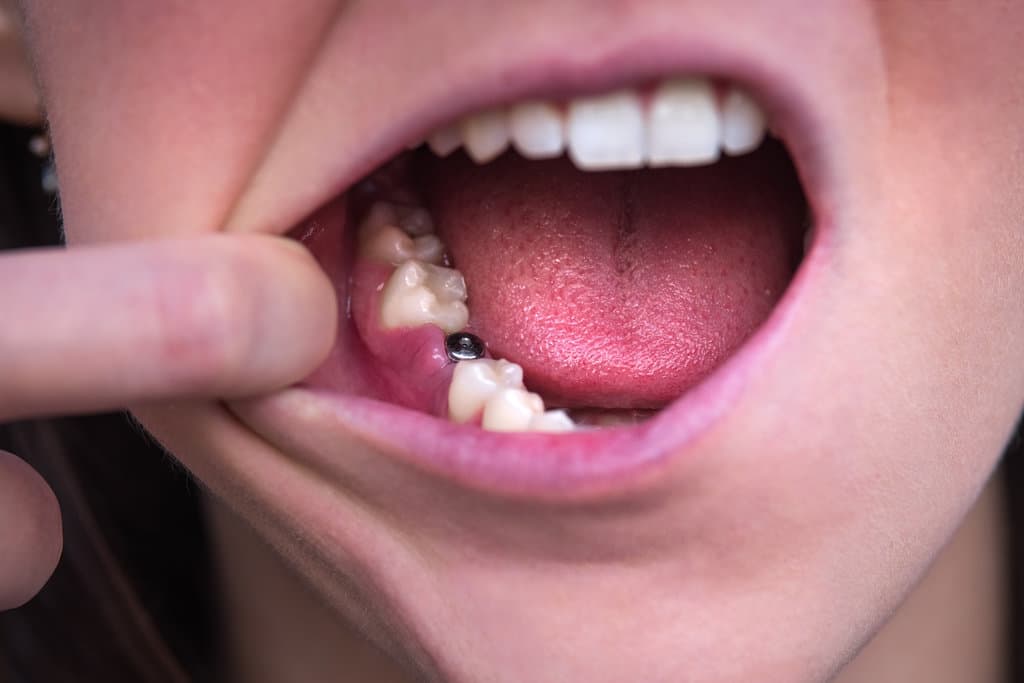
Before the commencement of a jawbone implant surgery, patients can expect a meticulously structured procedure involving several critical stages. Preoperative preparation includes extensive diagnostic imaging, such as CT scans, to assess bone structure and viability. The surgical team then devises a personalized surgical plan, guaranteeing ideal implant placement. On the day of surgery, local or general anesthesia is administered to guarantee patient comfort. The procedure involves a precise incision in the gum tissue, followed by the drilling of a pilot hole in the jawbone to anchor the implant securely. Postoperative care is essential for successful recovery, involving prescribed analgesics for pain management and antibiotics to prevent infection. Follow-up consultations are scheduled to monitor healing progress and implant integration.
Benefits of Jawbone Implants Over Traditional Solutions
Jawbone implants present a superior alternative to traditional dental solutions, offering numerous advantages that enhance both functionality and aesthetics. These implants provide significant functional advantages due to their ability to integrate seamlessly with the jawbone, mimicking the natural tooth root. This integration facilitates maximum force distribution during mastication, thereby improving overall oral function. In contrast to dentures and bridges, jawbone implants deliver long term stability, reducing the risk of prosthetic loosening over time. The osseointegration process guarantees a robust foundation, minimizing bone resorption and preserving jawbone density. Additionally, jawbone implants maintain facial structure integrity, preventing the sagging typically associated with tooth loss. Consequently, these implants offer a durable, reliable solution that surpasses traditional methods in both performance and longevity.
Potential Risks and Complications
While jawbone implants offer numerous benefits, they are not without potential risks and complications. One primary concern is infection, a common postoperative risk that necessitates stringent infection prevention protocols. Meticulous surgical technique and adherence to aseptic procedures are critical in minimizing bacterial contamination. Antibiotic prophylaxis may be employed as a supplementary measure to reduce infection incidence.
Another significant complication is nerve damage, which can occur due to the proximity of sensory nerves, such as the inferior alveolar nerve, to the implant site. This may result in temporary or permanent sensory disturbances, including paresthesia or anesthesia in the affected region. Precise preoperative imaging and surgical planning are essential to avoid nerve injury. Surgeons must exercise caution to mitigate these complications, ensuring ideal patient outcomes.
Recovery Process and Timeline
Following the completion of jawbone implant surgery, the recovery process is a vital phase requiring careful management to optimize healing and implant stability. Initial post-operative care involves minimizing physical stress on the jawbone to facilitate osseointegration. Patients are advised to adhere to prescribed jawbone care protocols, including maintaining oral hygiene and adhering to a soft diet to prevent undue pressure on the implant site. Recovery tips emphasize the importance of avoiding tobacco products and alcohol, as these can impede healing. Monitoring for signs of infection or implant rejection is essential, with follow-up appointments scheduled to assess progress. Typically, the recovery timeline extends over several months, varying based on individual healing rates and adherence to care guidelines, ultimately determining successful implant integration.
Future Trends in Jawbone Implant Technology
As advancements in biomedical engineering continue to evolve, the field of jawbone implant technology is poised for significant innovation. Emerging trends indicate a shift towards incorporating robotic assistance in surgical procedures, enhancing precision and reducing operative time. Robotic systems are expected to facilitate minimally invasive techniques, thereby expediting patient recovery and optimizing outcomes. Concurrently, the integration of virtual consultations is revolutionizing preoperative planning and postoperative care. These digital platforms enable remote assessments and tailored treatment plans, improving accessibility and patient engagement. Future innovations may focus on bioengineered materials that mimic natural bone and promote osseointegration. Collectively, these developments are set to redefine the landscape of jawbone implantology, offering unprecedented efficacy and personalized care for patients worldwide.
Frequently Asked Questions
How Much Does a Jawbone Implant Typically Cost?
The Current Question pertains to jawbone implant pricing. The cost factors include materials, surgical expertise, geographic location, and additional procedures. Typically, pricing ranges from $3,000 to $5,000, varying considerably based on individual clinical requirements and provider specifics.
Are Jawbone Implants Covered by Insurance?
Insurance policies vary considerably, influencing coverage options for medical procedures. Coverage for certain implants is often contingent on medical necessity, policy specifics, and provider agreements. Prospective patients should consult their insurance provider for detailed information regarding implant-related expenses.
Can Jawbone Implants Be Used in Children?
Jaw development in children is essential, therefore using implants should be carefully considered. Clinical assessments focus on growth patterns and dental health, ensuring any implantation does not interfere with natural bone development or alignment of teeth.
How Long Do Jawbone Implants Generally Last?
Implants’ longevity depends on various factors, including material composition, osseointegration quality, and biomechanical forces. Proper maintenance requirements, such as regular dental check-ups and oral hygiene, greatly influence their lifespan, which typically ranges from 10 to 15 years.
What Qualifications Should a Surgeon Have for Performing Jawbone Implants?
The qualifications required for a surgeon include extensive surgical expertise, proficiency in maxillofacial procedures, and adherence to patient safety protocols. Board certification and specialized training in oral surgery guarantee competence in performing such intricate operations.