

Dentists, essential to oral healthcare, possess the expertise to detect early signs of oral cancer. They conduct thorough examinations, identifying persistent ulcers, leukoplakia, and unusual lesions. Advanced diagnostic tools, like visual inspections and imaging, aid in accurate assessments. Regular dental check-ups enhance early detection, greatly influencing treatment efficacy. Understanding the technical nuances of oral cancer screening, particularly the dentist’s role, is vital in appreciating the impact of timely diagnoses on patient outcomes.
Understanding Oral Cancer: What Is It?
Oral cancer, a malignant neoplasm occurring in the oral cavity, encompasses a spectrum of malignancies that can affect the lips, tongue, cheeks, floor of the mouth, hard and soft palate, sinuses, and throat. This oncologic condition is characterized by abnormal cellular proliferation, often attributed to genetic mutations, tobacco use, and excessive alcohol consumption. Promoting oral cancer awareness is essential for early detection and improving prognostic outcomes. Evidence-based treatment options include surgery, radiation therapy, and chemotherapy, often employed in combination to enhance efficacy. Advances in targeted therapies and immunotherapy are emerging, offering hope for improved survival rates. Understanding these malignancies and the array of therapeutic interventions is critical for clinicians aiming to reduce morbidity and mortality associated with oral cancer.
The Role of Dentists in Oral Health Care
Dentists play a pivotal role in oral health care through the implementation of early detection techniques such as visual inspections and adjunctive diagnostic tools, which are critical for identifying precancerous lesions and early-stage oral cancers. The emphasis on preventive care underscores the necessity for routine dental examinations, as these are instrumental in reducing morbidity and improving patient outcomes. Additionally, professional training standards guarantee that dental practitioners are equipped with the requisite skills and knowledge to recognize potential malignancies and facilitate timely referrals to specialists for further evaluation.
Early Detection Techniques
How effectively can early detection techniques employed by dental professionals contribute to the identification of oral cancer? Dental professionals utilize advanced methodologies such as saliva tests and imaging techniques to enhance diagnostic precision. Saliva tests, leveraging biomarkers like DNA methylation and protein expression, offer a non-invasive and rapid means of detecting potential malignancies. Imaging techniques, including intraoral cameras and fluorescence imaging, provide high-resolution visualization of oral tissues, aiding in the identification of abnormal lesions. These methods, supported by evidence-based research, improve the sensitivity and specificity of oral cancer screenings. By integrating these technologies into routine examinations, dental professionals can identify pathological changes at an earlier stage, potentially improving patient outcomes through timely intervention and referral to specialists for further evaluation.
Preventive Care Importance
While early detection techniques are crucial in identifying potential malignancies, the broader role of dentists extends into the domain of preventive care, which is equally significant in managing oral health. Preventive dentistry encompasses regular check-ups, cleanings, and patient education to mitigate risk factors associated with oral cancer. Dentists employ evidence-based practices to instruct patients on maintaining ideal oral hygiene, thereby reducing the incidence of carcinogenic lesions. Through thorough patient education, individuals are informed about the detrimental effects of tobacco and alcohol, both primary risk factors for oral cancer. Additionally, dentists assess lifestyle factors, dietary habits, and genetic predispositions to formulate personalized preventive strategies. This proactive approach guarantees early intervention, ultimately enhancing patient outcomes and minimizing the need for invasive treatments.
Professional Training Standards
Professional training standards in dentistry are essential to guaranteeing that practitioners are equipped with the thorough skills necessary for effective oral health care management. Rigorous professional education encompasses an extensive curriculum, including pathology, diagnosis, and management of oral diseases such as cancer. Certification requirements mandate that dental professionals complete accredited programs followed by licensure examinations to validate their proficiency. Continuous education is crucial, allowing dentists to stay abreast of advancements in diagnostic technologies and treatment methodologies. Evidence suggests that well-trained dentists play an important role in the early detection of oral cancer, greatly impacting patient outcomes. The integration of standardized training protocols guarantees that dentists are competent in identifying malignant lesions, thereby enhancing their role in preventive oral health care.
Symptoms and Signs of Oral Cancer
Oral cancer often presents with indicators such as persistent ulcers, erythroplakia, leukoplakia, and unexplained bleeding, which can pose challenges in early detection due to their subtlety and overlap with benign conditions. The difficulty in distinguishing malignant lesions from non-threatening ones underscores the critical need for regular dental screenings, where clinicians utilize both visual examination and adjunctive diagnostic tools to enhance detection accuracy. Evidence supports that early diagnosis substantially improves prognosis, making routine evaluations essential in reducing morbidity and mortality associated with oral cancer.
Common Oral Cancer Indicators
A variety of indicators can signal the presence of oral cancer, necessitating a thorough understanding of its symptoms and signs. Clinicians often identify oral lesions as a primary indicator. These lesions may appear as persistent red or white patches that do not heal, suggesting potential malignant transformation. Unusual growths, or nodules, within the oral cavity, are also critical markers. These growths might manifest as lumps or thickened areas on the gums, tongue, or inner lining of the mouth. Additionally, unexplained bleeding, chronic sore throat, or difficulty swallowing are symptomatic of pathological conditions associated with oral cancer. Alterations in voice, persistent earache, and numbness in regions of the mouth or face further underscore the multifaceted presentation of this malignancy, necessitating thorough clinical evaluation.
Early Detection Challenges
Recognizing the multitude of indicators associated with oral cancer underscores the complexity of its early detection. Clinical manifestations such as leukoplakia, erythroplakia, and persistent ulcerations often mimic benign conditions, complicating differential diagnosis. The asymptomatic nature in initial stages further obscures early identification. Oral cancer awareness is essential, emphasizing the significance of patient education to identify atypical presentations like unexplained oral bleeding or dysphagia. Thorough knowledge of risk factors, including tobacco use and human papillomavirus (HPV) infection, enhances the understanding of symptomatic variability. The heterogeneity of signs necessitates a high index of suspicion among dental practitioners who must be vigilant to subtle changes during oral examinations. Evidence-based strategies underscore the role of timely identification in improving prognosis and treatment outcomes.
Importance of Regular Screenings
In light of the complexities associated with oral cancer detection, regular screenings are essential for early diagnosis and improved patient outcomes. Screening benefits include the identification of asymptomatic lesions, which are often overlooked by patients due to a lack of awareness. The technical process involves visual examination and palpation, targeting high-risk areas such as the tongue and floor of the mouth. Evidence suggests that systematic screenings improve survival rates by facilitating early intervention. Patient awareness is vital; educational programs can enhance understanding of oral cancer risks and symptoms, promoting proactive healthcare behavior. Regular dental visits, consequently, play a critical role in bridging the gap between early recognition and treatment, ultimately mitigating the disease’s progression and associated morbidity.
Diagnostic Tools Used by Dentists
Dentists employ a variety of diagnostic tools to detect oral cancer, each offering distinct advantages in clinical practice. Diagnostic imaging techniques, such as intraoral cameras and panoramic radiographs, provide detailed visualizations of oral structures, facilitating early identification of suspicious lesions. These tools enhance a clinician’s ability to distinguish between benign and malignant changes. Additionally, oral biopsies remain the gold standard for definitive diagnosis. By obtaining tissue samples from suspect areas, histopathological examination can confirm the presence of cancerous cells. This method guarantees accuracy in diagnosis, guiding subsequent treatment decisions. Evidence underscores the importance of these tools in improving patient outcomes, as early detection markedly increases survival rates. Therefore, integrating these diagnostic modalities is pivotal in contemporary dental practice.
The Importance of Regular Dental Check-Ups
The utilization of advanced diagnostic tools underscores the necessity for consistent dental evaluations, underscoring their role in the early detection of oral pathologies, including cancer. Regular visits facilitate thorough assessments of oral health, allowing for the identification of subtle changes indicative of potential malignancies. Evidence suggests that systematic dental check-ups enhance dental hygiene by enabling timely interventions, thereby reducing the risk of progression to advanced disease stages. During these evaluations, clinicians can employ specialized techniques to inspect mucosal tissues, evaluate risk factors, and provide personalized preventive strategies. By maintaining ideal oral hygiene and monitoring for early signs of pathology, individuals are more likely to preserve oral health and detect abnormalities at a stage amenable to effective treatment, thereby improving prognostic outcomes.
How Dentists Perform Oral Cancer Screenings
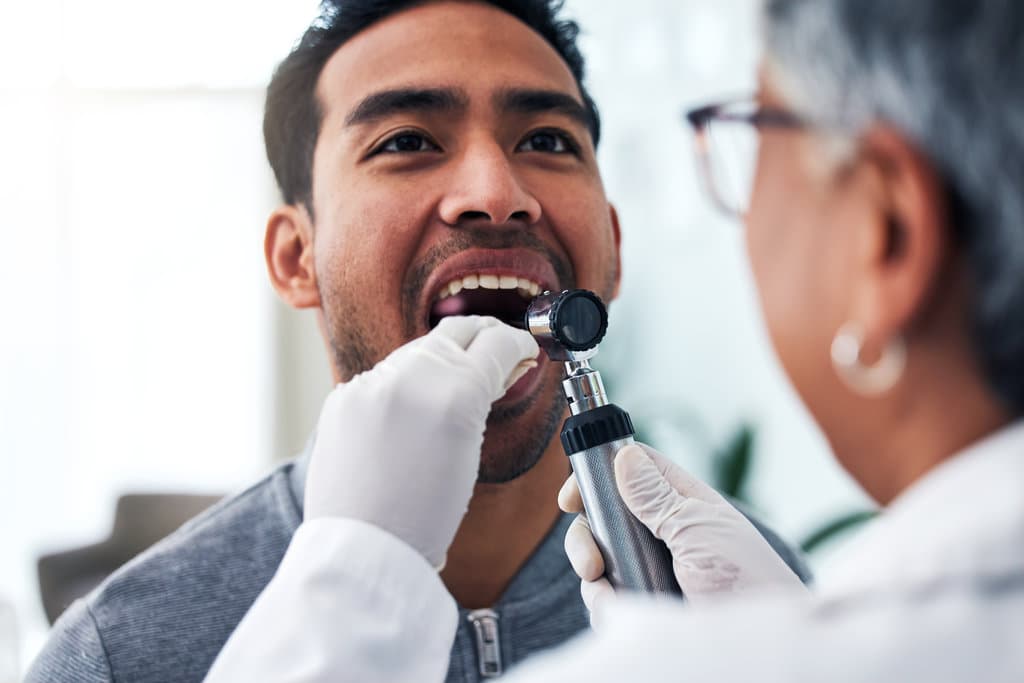
A thorough approach to oral cancer screenings involves a series of methodical steps designed to identify early signs of malignancy. Dentists employ oral screening techniques such as visual examinations, where they meticulously inspect the oral cavity for lesions, discolorations, or asymmetrical tissues. Palpation is used to detect any abnormal masses or lymphadenopathy. Advanced adjunctive tools, like toluidine blue staining and fluorescence visualization, enhance diagnostic accuracy. These techniques are essential for detecting precancerous changes or early-stage cancers.
Patient education plays a significant role in oral cancer screenings. Dentists provide guidance on recognizing symptoms and emphasize the importance of reporting any changes in oral health. This proactive approach guarantees that patients are informed and vigilant, facilitating early intervention and improving prognosis.
Risk Factors and Prevention Strategies
While oral cancer screenings are essential for early detection, understanding the risk factors and implementing prevention strategies are equally important components in combating the disease. Lifestyle choices, such as tobacco and alcohol use, considerably increase oral cancer risk. Genetic predisposition also plays a role, as individuals with a family history of cancer may have a higher susceptibility. Environmental factors, including exposure to ultraviolet light and certain chemicals, further contribute to cancer risk. Evidence-based prevention strategies emphasize modifying lifestyle choices, such as cessation of tobacco and alcohol use, and utilizing protective measures against environmental risks. Adhering to screening guidelines aids in early detection, which is vital for effective treatment. Thorough approaches combining awareness of these factors with preventative actions can greatly reduce oral cancer incidence.
What to Expect During an Oral Cancer Examination
During an oral cancer examination, patients should anticipate a meticulous process conducted by a dental professional, typically involving both visual and tactile assessments. Oral examination techniques commence with a detailed visual inspection of the oral cavity, including the lips, gums, tongue, and oropharynx, under adequate lighting. The practitioner may employ a gauze to manipulate the tongue for enhanced visibility. Palpation is utilized to detect any abnormal masses or indurations, involving systematic palpation of the neck, jaw, and lymph nodes. Patient communication is integral, with clinicians explaining each step, ensuring patient comfort and cooperation. The examination may integrate adjunctive diagnostic aids, such as toluidine blue staining or brush biopsies, to identify suspicious lesions, facilitating a thorough evaluation aimed at early detection.
The Impact of Early Detection on Treatment Outcomes
The meticulous nature of oral cancer examinations plays a pivotal role in the early detection of malignant lesions, greatly influencing treatment outcomes. Early identification of oral cancer markedly enhances treatment efficacy by enabling interventions at a more manageable stage of disease progression. Studies indicate that patients diagnosed at an early stage experience improved survival rates and reduced morbidity. Surgical resection, often less extensive in early-stage cancer, combined with adjunctive therapies, yields ideal patient outcomes. In addition, early detection minimizes the need for aggressive treatments, thereby preserving oral function and aesthetics. The correlation between early detection and favorable treatment efficacy underscores the importance of regular dental screenings. Consequently, dentists are key players in reducing oral cancer mortality through vigilant, systematic examinations.
Frequently Asked Questions
Can Oral Cancer Be Hereditary?
Oral cancer’s hereditary nature involves genetic factors and family history. While not directly inherited, susceptibility increases with genetic predispositions. Studies indicate familial patterns can influence risk, yet lifestyle and environmental factors primarily drive oral cancer development.
Are There Home Tests for Detecting Oral Cancer?
Current research indicates limited availability of reliable home screening tools for oral cancer. While some devices and kits claim early detection capabilities, their efficacy lacks thorough validation through rigorous clinical trials, necessitating professional evaluation for accurate diagnosis.
Does Insurance Cover Oral Cancer Screenings?
Insurance plans often include screening benefits for oral cancer, contingent on policy specifics. Detailed analysis reveals coverage varies, with some plans mandating preventive services, while others require medical necessity proof. Evidence-based guidelines influence these insurance determinations.
Can Lifestyle Changes Reduce Oral Cancer Risk?
Lifestyle changes notably influence oral cancer risk. Evidence-based studies show that dietary changes, emphasizing fruits and vegetables, alongside smoking cessation, can greatly decrease carcinogenic exposure, thereby reducing the likelihood of developing oral malignancies.
How Accurate Are At-Home Oral Cancer Screening Kits?
At-home oral cancer screening kits vary in accuracy. Clinical studies indicate their screening effectiveness is limited compared to professional evaluations. False positives and negatives are possible, emphasizing their role as preliminary tools, not definitive diagnostics.